
The Course
Advanced PRP Joint Injection & MSK Ultrasound Training Course
In today’s competitive healthcare market, patients are actively seeking minimally invasive solutions for pain and injuries. Our Advanced PRP & Joint Injection Training Course is the definitive online program designed to make you a leader in the field of regenerative medicine. This intensive training provides medical professionals with the skills and confidence to master advanced injection techniques, trigger point therapy, and cutting-edge biologic treatments like Platelet-Rich Plasma (PRP) and A2M.
This is more than a workshop; it’s a transformative course that bridges the gap between theory and real-world application. Through step-by-step video instruction and injection demonstrations you can revisit as often as you need, you will gain the expertise to deliver superior patient outcomes, expand your practice’s services, and meet the growing demand for effective, non-surgical pain solutions.
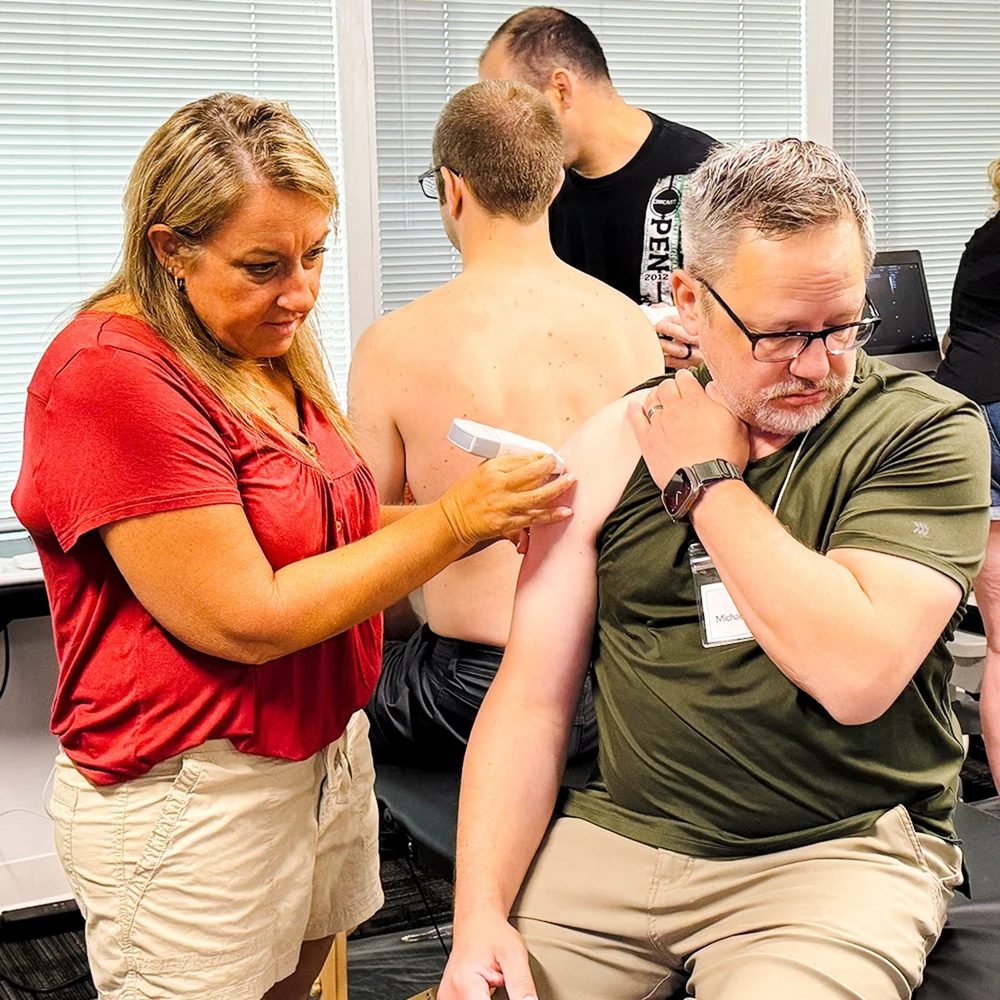
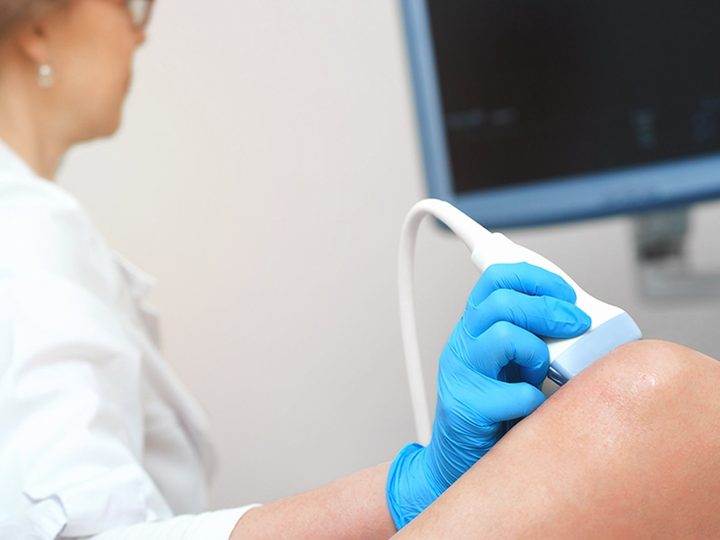
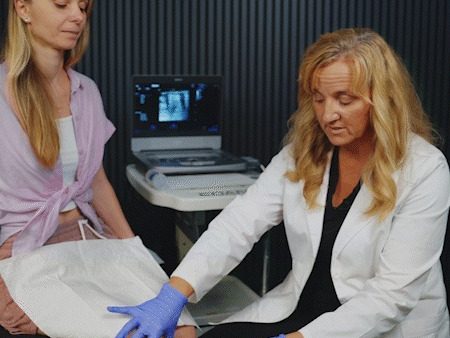
MSK Ultrasound Training Curriculum
Core Curriculum: A Deep Dive by Treatment Area
Our comprehensive curriculum is designed to give you mastery over the most common patient complaints, from fundamental principles to advanced applications.
Foundational Concepts: Biologics, Injectables & Diagnostics
Before treating specific joints, you will master the core knowledge that informs every procedure.
- Biologic Therapies (PRP & A2M): Receive detailed exposure to Platelet-Rich Plasma (PRP) and Alpha-2-Macroglobulin (A2M), learning the complete process from preparation to administration.
- Injectable Options: Understand the effects of steroid injections and why to avoid them in most cases. Learn the role of Hyaluronic Acid and how it can be used with PRP.
- Diagnostic Techniques: Learn to perform diagnostic injections to gauge treatment success and refine your ability to use ultrasound as a primary diagnostic tool.
- Ultrasound Basics: Learn the principles of MSK ultrasound, including machine setup and probe handling, to identify anatomical landmarks for safe and accurate injections.
Shoulder
- Diagnosis: Learn the complete differential diagnosis of shoulder pain and how to perform a targeted physical exam to determine the precise injection location.
- Injection Skills: Master injection techniques for common shoulder pathologies, including rotator cuff injuries, glenohumeral arthritis, labral tears, and biceps tendonitis.
Elbow
- Diagnosis: Confidently examine the elbow to establish a differential diagnosis for various sources of pain.
- Injection Skills: Acquire precise injection techniques for treating Medial and Lateral Epicondylitis (Golfer’s and Tennis Elbow).
Knee
- Diagnosis: Conduct a comprehensive knee examination, learn how to review MRI reports to determine candidacy, and grade osteoarthritis from an X-ray.
- Injection Skills: Develop expert injection techniques for knee arthritis, complex ligament injuries, meniscal tears, and chronic tendonitis.
Foot & Ankle
- Diagnosis & Treatment: Learn to effectively diagnose and treat chronic Achilles’ tendonitis with PRP.
- Advanced Protocols: Master techniques for treating chronic plantar fasciitis, one of the most persistent challenges in podiatry and pain management.
Advanced Pain Management Protocols
- Trigger Point Therapy: Develop proficiency in accurately identifying and injecting trigger points to provide effective pain relief and improve function.
- Headache & Migraine Relief: Learn innovative injection techniques, including nerve blocks, to expand your practice offerings and treat chronic head pain.
- Neuropathy Treatments: Master specialized injection protocols for addressing neuropathic pain in the upper and lower extremities.
Your Instructor
Meet Your Expert PRP Instructor: Karen Rea, FNP-BC

This premier injection training course is taught by Karen Rea, a board-certified Nurse Practitioner with over 25 years of healthcare experience and a leader in the regenerative medicine community.
- A Renowned Educator: Karen has taught injection courses to over 2,500 medical providers from across the United States. Her focus on hands-on learning produces confident, competent practitioners.
- Certified Expert: She holds advanced certifications in Pain Management (AAOPM), is an Associate Member of the American Academy of Regenerative Medicine, and is a certified provider of leading PRP applications, including the Vampire Facelift® and O-Shot®.
- Clinical Specialist: Karen specializes in regenerative medicine, sports medicine, and pain management, bringing a wealth of real-world clinical experience to her teaching.
What Enrollment Includes
Comprehensive PRP Course & Ongoing Support
Our goal is your long-term success. Your investment includes robust resources and an unparalleled ongoing support network.
- Certificate of Completion: Receive a professional certificate to document your advanced training.
- Lifetime Access to Online Training Video Library: An essential resource to review procedures and refine your injection techniques 24/7.
- Practice Implementation Toolkit: Includes professional patient consent forms, pre/post-treatment instructions, and equipment sourcing guides.
Questions
Platelet Rich Plasma Course FAQ's
Who is Qualified to Perform PRP Injections?
In order to perform PRP injections, you need a valid medical license. Generally any MD, DO, PA, etc. is qualified to perform PRP joint injections. Many nurses are also eligible depending upon whether they're required to inject under a supervising physician by their local medical board or given full practice authority.
Why is ultrasound part of the training?
Using ultrasound for guidance significantly increases the accuracy, safety, and efficacy of many joint injections. MSK ultrasound training is built into this ultrasound guided injection course from the first module, covering machine setup, probe handling and needle visualization before you approach a joint. Learning the fundamentals of this technology is essential for any provider looking to achieve optimal patient outcomes.
Is this a hands-on injection course?
This is a 100% online course offering. Every technique is taught with step-by-step injection demonstrations you can watch, pause and repeat as often as you need, and your lifetime access to the video library means you can review any procedure again before your first cases.
What type of centrifuge do I need for PRP therapy?
In order to perform PRP therapy, the centrifuge you use needs to be FDA Approved. We see a lot of practices and practitioners using basic lab/research centrifuges which can not be used to process blood which is intended to go back into the body.
The Science
How Does Platelet Rich Plasma Work?
Platelet-rich plasma (PRP) is a blood derivative containing a higher concentration of platelets than found in whole blood. The use of PRP has gained global interest for its use in regenerative therapy for injuries and degenerative conditions. Due to the high concentration of platelets, PRP can deliver supraphysiologic doses of growth factors that can boost the natural healing process in both acute and chronic injuries. The growth factors released play a role in all three phases of wound healing and tissue repair (inflammation, proliferation, and remodeling) making it ideal for the treatment of injuries.
Platelet-derived growth factor (PDGF), fibroblast growth factor (FGF), vascular endothelial growth factor (VEGF), insulin-like growth factor-1 (IFG-1), and numerous other growth factors aid in healing by stimulating cellular growth, migration, and morphogenesis. In addition, these factors enhance fibroblast migration and proliferation, upregulate vascularization, and increase collagen deposition. These biologic properties make PRP ideal in the treatment of tendinopathy, which intrinsically has a poor ability to heal. Additionally, PRP has the ability to aid in the healing of ligaments, muscle, and bone, as well as, has been shown to be beneficial in mild to moderate osteoarthritis.
Importantly, PRP is obtained from the patient’s blood and thus has no known adverse effects or allergic reactions. A property that neither corticosteroids nor hyaluronic acid can claim. Overall, PRP injections have shown great potential in the treatment of various tendinopathies, spinal disorders, recalcitrant wounds, and osteoarthritis without the risk of side effects.
The Opportunity
Why Add PRP Injections to Your Practice?
The most common musculoskeletal disorder patients seek medical treatment for is tendinopathy. Osteoarthritis affects approximately 14 million Americans, a number that is expected to continue to increase. Having the ability to administer PRP for tendon and joint pain provides patients with an effective, non-surgical option for these debilitating conditions.
PRP has shown success in the treatment of various tendinopathies such as Achilles, rotator cuff, patellar, and lateral epicondylitis (tennis elbow). PRP injections have also been shown to be effective in the treatment of mild to moderate osteoarthritis. This innovative therapy can set your practice apart and provide your patients with one of the most exciting advancement in sports medicine and regenerative therapy. PRP is among one of the most researched and interesting therapies currently being used and can benefit both your surgical and non-surgical patients.
References:
- Boesen AP, Hansen R, Boesen MI, et al. Effect of high-volume injection, platelet-rich plasma, and sham treatment in chronic midportion achilles tendinopathy: a randomized double-blinded prospective study. Am J Sports Med. 2017;45:2034–2043.
- Rha D, Park G-Y, Kim Y-K, et al. Comparison of the therapeutic effects of ultrasound-guided platelet-rich plasma injection and dry needling in rotator cuff disease: a randomized controlled trial. Clin Rehabil. 2013;27:113–122.
- Shams A, El-Sayed M, Gamal O, et al. Subacromial injection of autologous platelet-rich plasma versus corticosteroid for the treatment of symptomatic partial rotator cuff tears. Eur J Orthop Surg Traumatol. 2016;26:837–842.
- Dragoo JL, Wasterlain AS, Braun HJ, et al. Platelet-rich plasma as a treatment for patellar tendinopathy: a double-blind, randomized controlled trial. Am J Sports Med. 2014;42:610–618.
- Vetrano M, Castorina A, Vulpiani MC, et al. Platelet-rich plasma versus focused shock waves in the treatment of Jumper’s knee in athletes. Am J Sports Med. 2013;41:795–803.
- Mishra AK, Skrepnik NV, Edwards SG, et al. Efficacy of platelet-rich plasma for chronic tennis elbow: a double-blind, prospective, multicenter, randomized controlled trial of 230 patients. Am J Sports Med. 2014;42:463–471.
- Gosens T, Peerbooms JC, van Laar W, et al. Ongoing positive effect of platelet-rich plasma versus corticosteroid injection in lateral epicondylitis: a double-blind randomized controlled trial with 2-year follow-up. Am J Sports Med. 2011;39(6):1200–8.
- Peerbooms JC, Sluimer J, Bruijn DJ, et al. Positive effect of an autologous platelet concentrate in lateral epicondylitis in a double-blind randomized controlled trial: platelet-rich plasma versus corticosteroid injection with a 1-year follow-up. Am J Sports Med. 2010;38(2):255–62.
- Arirachakaran A, Sukthuayat A, Sisayanarane T, et al. Platelet-rich plasma versus autologous blood versus steroid injection in lateral epicondylitis: systematic review and network meta-analysis. J Orthop Traumatol. 2016;17(2):101–12.
- Krogh TP, Bartels EM, Ellingsen T, et al. Comparative effectiveness of injection therapies in lateral epicondylitis: a systematic review and network meta-analysis of randomized controlled trials. Am J Sports Med. 2013;41(6):1435-46.